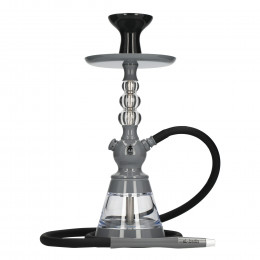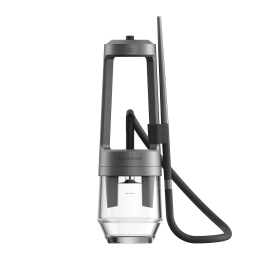


Who Invented Shisha? The Surprising Story of Its Inventor
You've smoked dozens of them, maybe hundreds. You know the taste, the gentle bubbling of the water, the clouds curling up to the ceiling on evenings with friends. But have you ever stopped for a second to wonder who actually invented shisha?
Here's the twist: the most sociable object of your evenings was dreamed up more than 400 years ago by a doctor. And the wildest part of the story is the reason he created it. Spoiler: he thought he was doing something good for his patients' health.

The short answer: Hakim Abul-Fath Gilani
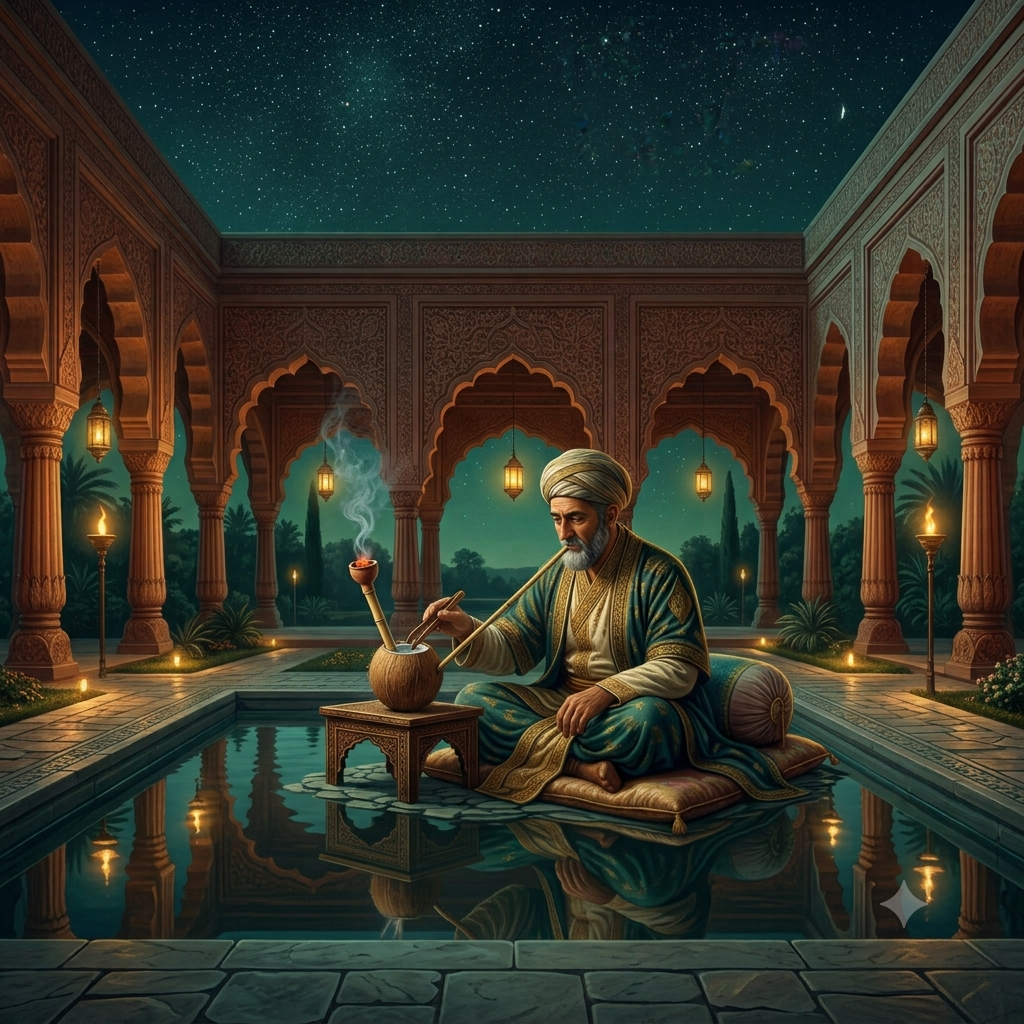
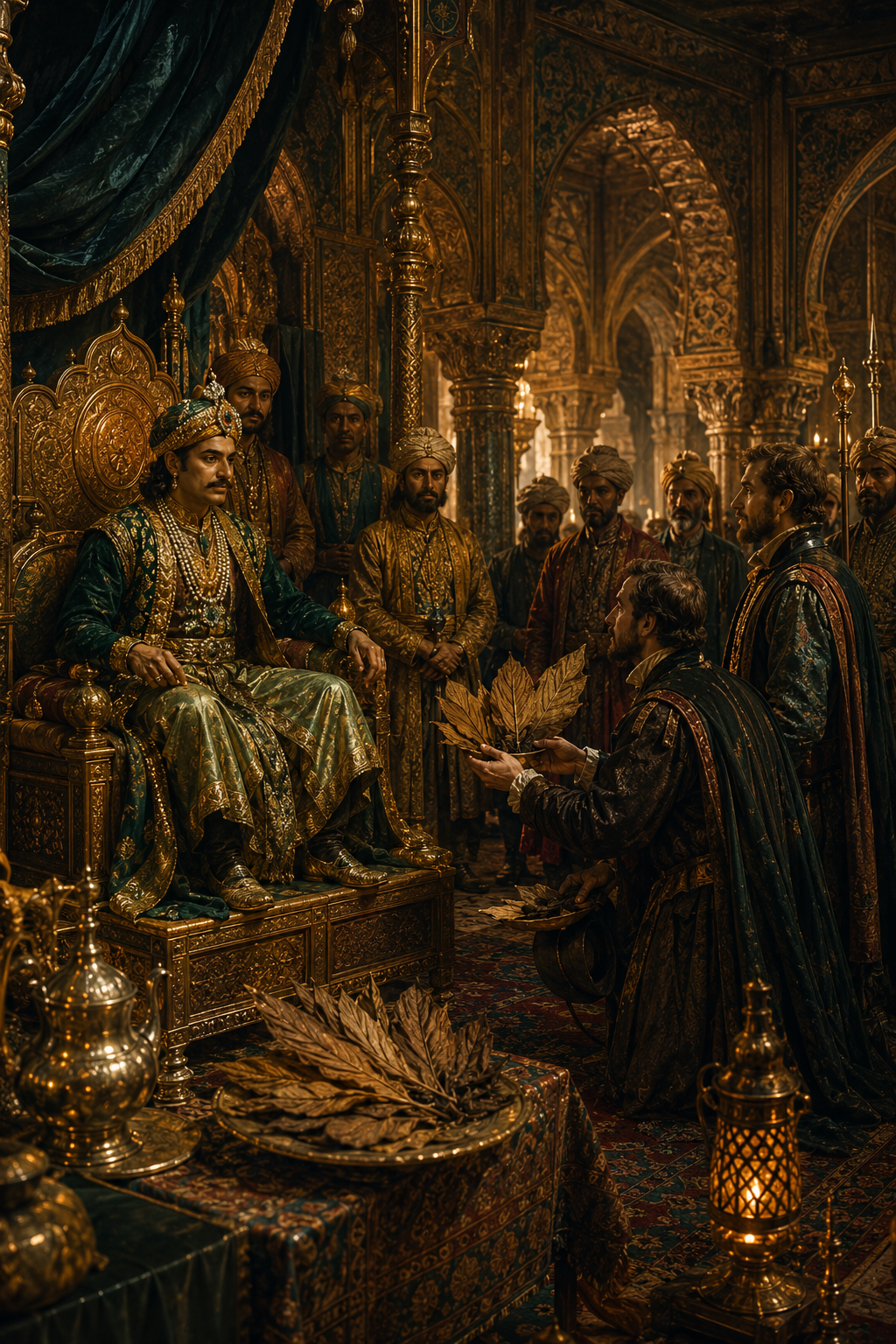
Shisha was invented in the late 16th century by Hakim Abul-Fath Gilani, a Persian physician at the court of the Mughal emperor Akbar, in India. He is the man most historians and encyclopaedias credit as the father of the water pipe — the direct ancestor of the hookah we know today.
That's the express answer. But if you stop there, you'll miss the best part of the story.
A physician at the court of the most powerful emperor of his time
The late 1500s. We're in India, at the heart of the Mughal Empire, one of the richest and most refined civilisations the world has ever known. On the throne sits Akbar (1542–1605), a ruler fascinated by the sciences, the arts and the great minds of his age.
Among those great minds, one man: Hakim Abul-Fath Gilani, a Persian physician and adviser to the emperor. Around this time a new product had just arrived in the Indian courts, brought by Portuguese and European merchants: tobacco. The novelty was a sensation. Nobles, courtiers and elites began smoking heavily, without the slightest idea of the long-term effects.
Gilani, ever the physician, watched the scene with concern. And that's when he had an idea that would echo down the centuries.
The paradox: shisha was invented to be "less harmful"
Here's the twist no one tells at your evening sessions.
Gilani reasoned that if the smoke were passed through water before being inhaled, it could be "purified", cooled and made gentler on the body. In other words: the inventor of the hookah wasn't a party-goer chasing pleasure. He was a physician trying, in his own way, to protect the health of his contemporaries.
The intention was noble. The reasoning, for the time, was fairly logical. It gave rise to the founding principle of shisha, still valid today: the smoke passes through a vessel filled with water before reaching the smoker.
One honest caveat, because we like our facts straight: this version of the story is the most widespread and the best supported by the sources, but it rests on historical accounts and secondary writings rather than laboratory proof from the era. The "grand history" of shisha blends documented facts, oral tradition and a touch of legend. We'll come back to it — because, medically speaking, Gilani's intention didn't quite pan out.
From coconut shell to brass masterpiece
Forget, for a moment, the engraved brass stems and crystal vases. The very first water pipes were nothing luxurious.
The earliest traces point to rudimentary devices made from a coconut shell as a reservoir and a stem of wood or bamboo to draw the smoke. You find objects like these in India as well as in Ethiopia, long before shisha took its modern shape. Simple, ingenious, effective.
Then shisha climbed the social ladder. In the Mughal courts and among the Persian elite, it became a genuine symbol of prestige. A merely functional object would no longer do: the hookah was dressed in precious metals, engravings and elaborate finishes. Some households even kept dedicated servants tasked with preparing and carrying their master's pipe. Smoking became an art of living, a social marker as much as a pleasure.

How shisha conquered the planet
A good idea never stays confined to a single country. From Mughal India, the water pipe set off on an extraordinary journey.
It first reached Persia (present-day Iran), where it took deep root in the culture. Then it travelled on to the Ottoman Empire, which adopted it and spread it across its vast territory. From there it radiated out to the Middle East, North Africa, and eventually won over the whole world.
India → Persia → Ottoman Empire → the rest of the world. That route explains why, today, you'll find shisha just as readily in a Cairo café as in a Paris living room. Each culture added its own touch, its own materials, its own rituals — but the principle Gilani imagined has never changed.
What the science really says today
There's no telling shisha's story honestly without being straight on this point. Gilani believed water would make tobacco less harmful. Modern medicine has shown that, unfortunately, it doesn't.
Health authorities (such as the WHO, the CDC and the American Lung Association) are clear: passing the smoke through water removes only a very small fraction of the toxic substances. A single shisha session exposes you to significant doses of tar, carbon monoxide, heavy metals and carcinogenic compounds. Some studies even estimate that one session, by volume of smoke inhaled, can be equivalent to a large number of cigarettes.
In other words: the original idea was generous, but water filtration doesn't protect the way it was long believed to. Shisha remains a tobacco product, with the risks that come with it. It's a reality worth knowing so you can smoke mindfully and in moderation. (Sensitive topic: if you'd like to quit or cut down your tobacco use, a healthcare professional can support you.)
From tradition to revolution: shisha in the modern era
Here's the best part: four centuries after Gilani, his creation has never been more alive. The hookah has reinvented itself, balancing absolute respect for tradition with innovations worthy of a high-tech lab. Here's a quick tour of the brands writing the contemporary chapter of this story.
Khalil Mamoon, keeper of the tradition
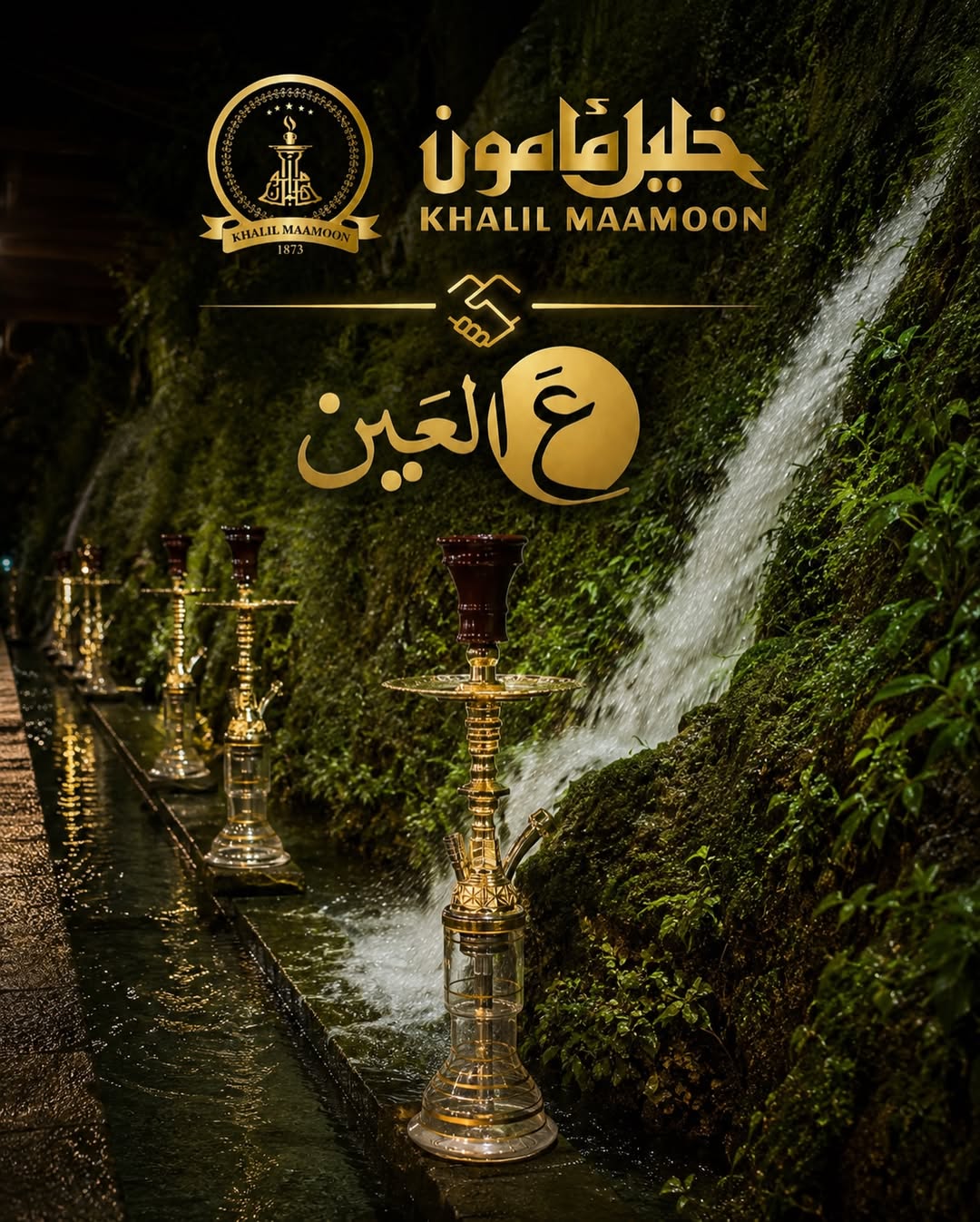
If one brand embodies the direct heritage of the ancestral shisha, it's Khalil Mamoon. These Egyptian pipes, handmade in Cairo workshops, carry on know-how passed down from generation to generation. Engraved brass stems, hand-soldered assemblies, slender silhouettes: every piece is a slice of living history. Discover the iconic models in the Khalil Mamoon collection, for those who want to smoke the way it was done a century ago.
La Céleste, the icon that became a cult favourite in France
A change of era. In France, one shisha has become a true icon: the Céleste. Compact design, smooth purge, refined finishes: it won over a whole generation of smokers with its perfect balance of looks and performance. A success measured in numbers: more than 500,000 Céleste sold since 2006. The Céleste shisha is today a symbol of modern French-style shisha — proof that a 400-year-old object can become an object of contemporary desire.

El-Badia P1, the patented shisha that fits in a bag
Gilani used a coconut. We invented the shisha you can take anywhere. The portable El-Badia P1 is a patented creation designed for the modern era: compact, tough, transportable everywhere, without ever sacrificing session quality. A playful nod to shisha's primitive forms, with four centuries of engineering added on. It's our way, at El-Badia, of moving the story forward.

Kaloud, the pioneer that reinvented heat
There's a before and an after Kaloud. With its famous Lotus, the brand did what no one had dared: replacing the traditional aluminium foil with a high-quality aluminium heat-management system. The result: controlled combustion, longer sessions, dense smoke and heightened flavours. A real technological turning point, to explore in the Kaloud range.
Steamulation, precision engineering
If shisha had a "haute horlogerie" brand, it would be Steamulation. This house has pushed hookah engineering to a rarely reached level: fine materials, patented purge systems, millimetre-precise manufacturing tolerances. A shisha conceived like a precision instrument. Discover it in the Steamulation collection.
FUMO, the laboratory-glass shisha
What if your shisha were as transparent as a piece of scientific equipment? That's the bet FUMO makes, crafting hookahs from borosilicate glass — the same heat-resistant glass used in laboratories. Clean-lined, transparent, almost hypnotic, these pipes turn every session into a spectacle. Take a look at the FUMO universe.

Quasar, the thermal bowl that shook up the traditional hookah
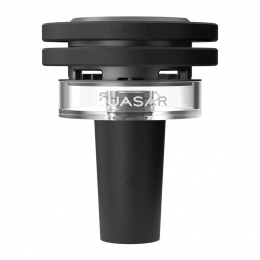
We finish with the mavericks. Designed in France, Quasar upended the codes with its dual-chamber thermal bowl and futuristic-looking pipes. Precise heat control, dense smoke, technical materials like borosilicate glass: Quasar reconciles tradition and innovation. The Quasar Raas 2 thermal bowl has become a benchmark, and the whole Quasar range perfectly illustrates where tomorrow's shisha is heading.
From the coconut shell of Mughal India to laboratory glass and thermal bowls, shisha will have travelled an incredible road. And at every step, the same idea: chasing the best possible session.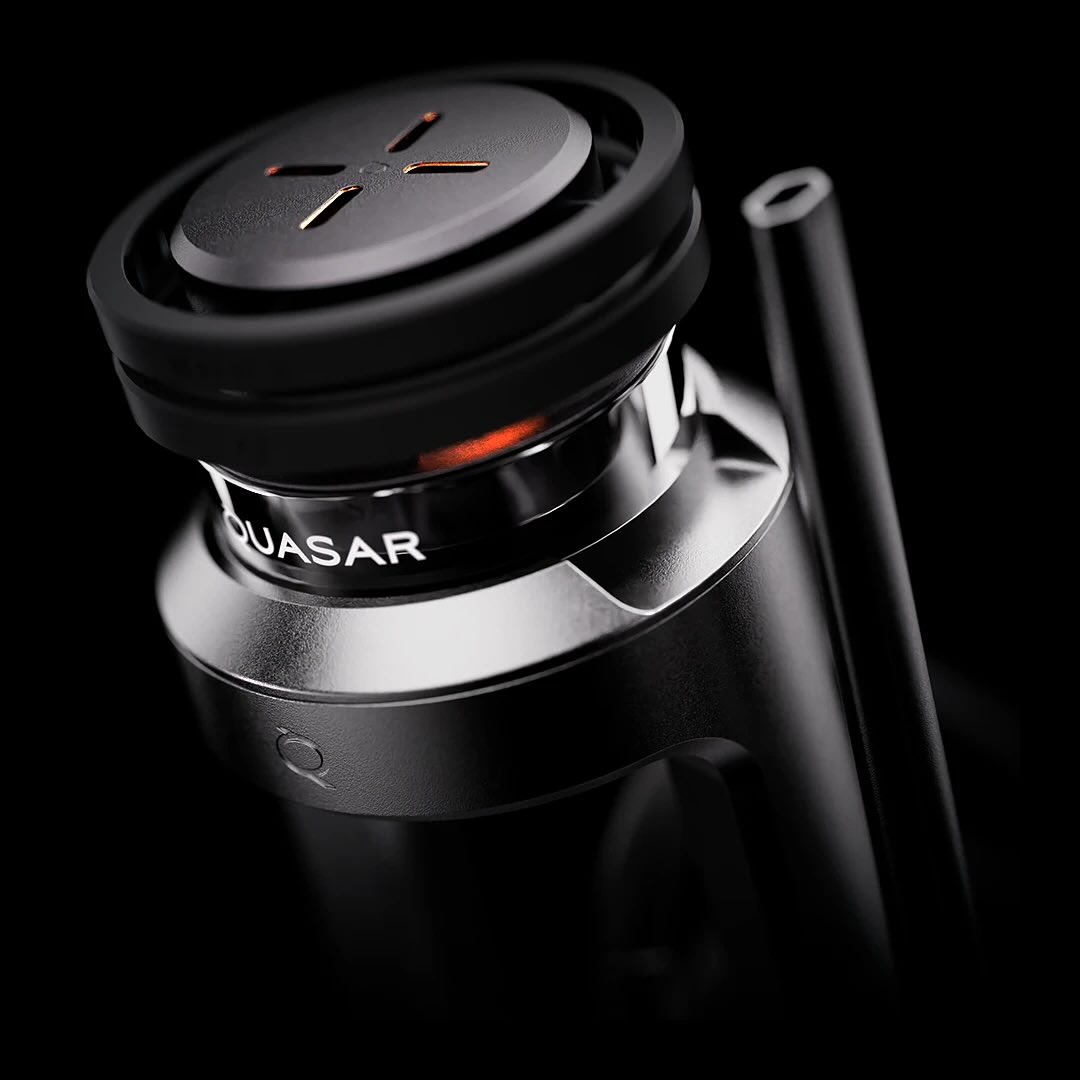
FAQ: everything you wanted to know about the inventor of shisha
Who invented shisha?
Shisha is credited to Hakim Abul-Fath Gilani, a Persian physician at the court of the Mughal emperor Akbar, in India, in the late 16th century.
Why was shisha invented?
According to the most widespread historical accounts, Gilani sought to make tobacco less harmful by passing the smoke through water to filter and cool it.
How old is shisha?
Around 400 to 450 years. Its invention is placed in the late 1500s, during the reign of Akbar (1542–1605).
Where does the word "narghile" come from?
The term derives from the Persian nârgil, meaning "coconut" — a nod to the very first water pipes made from coconut shells.
Is shisha really less harmful than a cigarette?
No. Contrary to its inventor's original intention, water filtration removes only a tiny fraction of the toxic substances. Shisha remains a tobacco product with real health risks.
How did shisha spread around the world?
From India, it reached Persia, then the Ottoman Empire, before spreading to the Middle East, North Africa and the rest of the world.
In short
The next time you light your bowl, remember: you're carrying on a gesture dreamed up more than four centuries ago by a Persian physician who wanted to do his patients good. From the coconut to the patented El-Badia P1, by way of Cairo's workshops and new-generation thermal bowls, the story of shisha is one of an endless quest: the quest for the perfect session.
Fancy writing your own chapter? Explore all our brands and exceptional shishas at el-badia.com.